Guide A3 Independent notes
Experimental film history: avant-garde cinema and how to watch it
Experimental film asks what film can be when it is not required to tell a conventional story. It is the oldest branch of moving-image art, and the one that taught video and digital artists what to try.
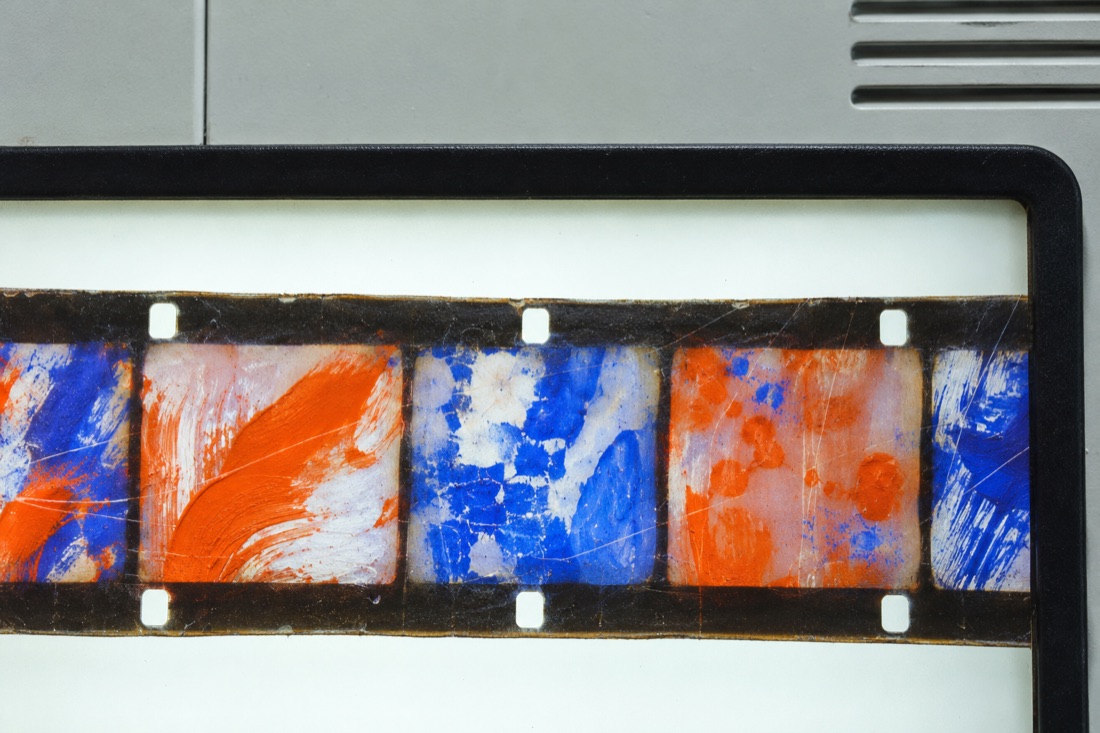
What is an experimental film?
An experimental film is a film that treats the medium itself as the subject. It might avoid actors and plot, paint straight onto the film strip, repeat one shot, rework old footage or make rhythm and colour the main events. The terms avant-garde film, experimental cinema and artists' film are used for overlapping territory, and the exact boundary is disputed even among curators.
A useful test is not what the film looks like, but whether it invites you to think about seeing, time or the film form.
The 1920s avant-garde
Experimental film grew with the modern art movements of the early twentieth century. In Europe, artists connected to Dada and Surrealism made short films in the 1920s. Hans Richter and Oskar Fischinger explored abstract motion and rhythm. Man Ray made Le Retour à la raison in 1923, and Un Chien Andalou followed in 1929. The same year saw Dziga Vertov's Man with a Movie Camera, a film about film-making itself.
These works already show the main strategies: abstraction, shock, montage and attention to the machine.
Experimental cinema history after the war
In the United States the 1940s and 1950s brought a new wave of personal film-making. Maya Deren's Meshes of the Afternoon, from 1943, is a classic example of a film built from dream logic, repetition and the camera as a participant. In the 1960s Stan Brakhage made Mothlight (1963) by laying moth wings and plant matter between strips of film, producing a film without a camera at all.
Infrastructure grew as well. The Film-Makers' Cooperative was founded in New York in 1962, Anthology Film Archives opened in 1970, and the Ann Arbor Film Festival, begun in 1963, built a long standing home for the form.
Types of experimental films
No list is complete, but these types come up again and again.
- Abstract film: colour, line and rhythm without recognisable scenes.
- Structural film: a simple structure drives everything, as in Michael Snow's Wavelength (1967), a long, slow zoom across a room, and Tony Conrad's The Flicker (1966).
- Found footage: existing film is cut, scratched or reordered into something new.
- Diary and personal film: the camera records daily life, a practice associated with Jonas Mekas.
- Expanded cinema: projections, performance and installation that leave the single screen behind.
Experimental film examples and how to watch them
Many classic works are available in museum programmes, university film libraries and curated streaming collections. Start with short ones, since many run under ten minutes, and watch them without distractions. Read nothing first if you can bear it, then read the programme note afterwards.
Cinematheques and film-makers' cooperatives are good places to watch on actual film, which gives different grain, flicker and sound. Festivals are the other route, and we list several in our guide to media art festivals.
From film to new media art
When artists picked up video and then computers, they carried over the questions that experimental film had raised: what is the frame, what is duration, what happens when the image is made from the machine's own materials. That is why the history of video art and the wider field of new media art cannot be told without film.