Guide A2 Independent notes
The history of video art, from altered television to gallery screen
Video art began when artists stopped watching television and started treating it as an object, a signal and a place. Here is the short path from there to today's installations.
What is video art?
Video art is art that uses video or television technology as its medium. It can be a single screen showing a looped film, a room with several projections or a sculpture built from monitors. Unlike cinema, it usually does not assume a seated audience and a fixed running time. A visitor may walk in halfway through and still be in the work.
It overlaps with experimental film, performance and installation, which is why the borders are argued about. Our guide to experimental film history covers the film side of that overlap.
Origins of video art: television as material
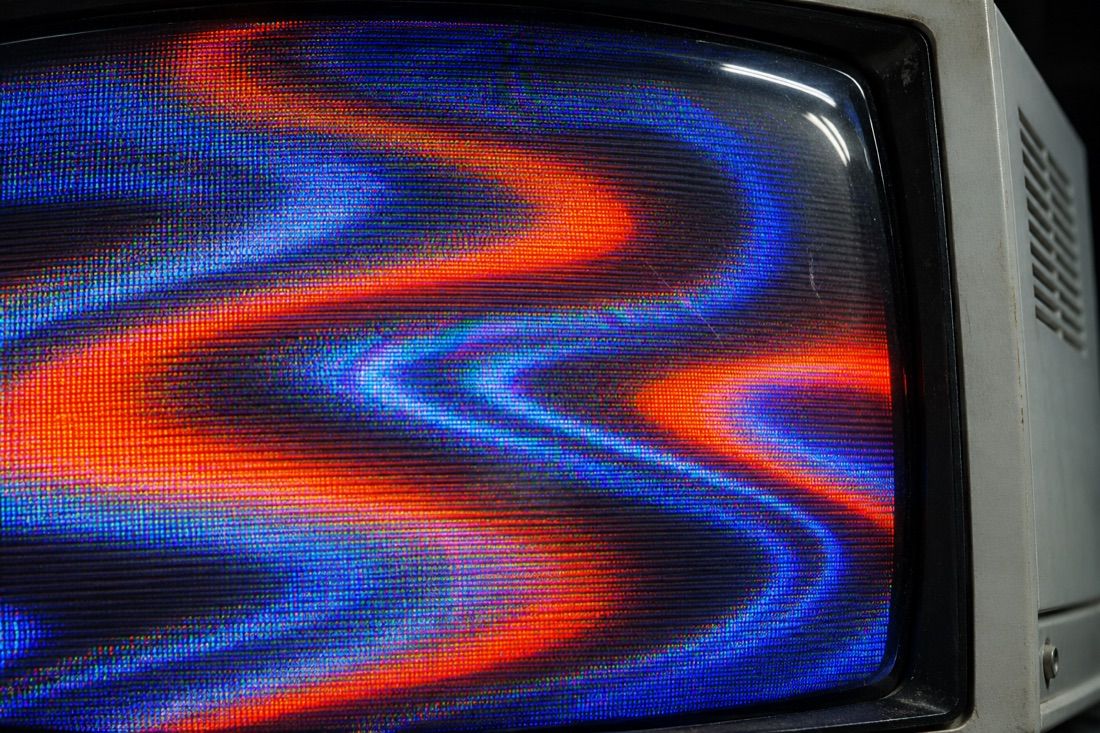
Histories of the field often start in 1963, when Nam June Paik showed altered television sets in an exhibition in Wuppertal, Germany. He distorted the picture with magnets and manipulated the signal so the screen became something to sculpt rather than a window to look through. Other artists in Europe and the United States were working with television in the same years, so the start of video art is better seen as a cluster than a single event.
This is also the usual answer to the question of who the father of video art is. Paik is the name most often given, but historians point out that the medium had several early practitioners.
Portable video and the artist's studio
From the late 1960s, portable video recorders became available outside broadcasting. That changed who could make moving images. Artists could record a performance in their own studio, play it back at once and show it in a gallery without a lab or a distributor.
Many early works used the camera and monitor as a mirror, filming the artist's body, feeding the signal back into the screen or exploring real time and boredom. Joan Jonas's Vertical Roll from 1972 plays with the rolling glitch of a television picture. Spaces such as The Kitchen in New York, founded in 1971 by Steina and Woody Vasulka, became important places to show such work.
Video art timeline: formats and ideas
A rough timeline helps. The 1960s were about television as object and signal. The 1970s explored the body, performance, feedback and early synthesizers. The 1980s brought music television, higher production values and larger projections. From the 1990s cheap digital cameras, editing software and projectors made big, immersive installations normal.
Formats changed too: open reel tapes, cassette formats such as U-matic and VHS, then digital files. Each format has its own risks of decay and obsolescence, which is why museums keep conservators who specialise in time-based media.
Single-channel video and video installation
Single-channel video is a work for one screen, often distributed as an edition and shown in a screening room or on a monitor. Video installation uses space: several screens, projections on walls, objects and sound arranged so that the visitor moves through the work. The same artist may make both kinds.
When you see video art in a museum, check whether there is a start time, how long the loop runs and what the label says about the edition. Give a work its full length if you can. Many pieces only make sense over time.
Video art examples and where to continue
Good starting points are the video holdings and exhibition pages of large museums and the online archives of media arts organisations, which often stream full works. Read short essays first, then watch a work end to end before you look for more context.
From here, our overview of new media art museums lists places that collect video, and the main guide places video next to net art, data art and film.